

A backyard can hold a dining table, a grill, and comfortable chairs yet still feel awkward when guests arrive. The difference is often the layout: where people gather, how food reaches the table, and whether anyone can move without squeezing past furniture.
Useful backyard entertainment designs start with how you spend time outdoors. A compact dining patio may suit weekly family meals, while a separate lounge and game area makes more sense for casual gatherings. These twelve arrangements offer different starting points, with practical ways to adapt each one.
Short Definition
Backyard entertainment designs are outdoor layouts that organize seating, dining, cooking, and recreation around how people gather. They help homeowners create usable hosting spaces while accounting for available room, comfort, budget, and maintenance.
Homepatiolife Mission Statement
Homepatiolife helps homeowners, renters, and home lovers make informed choices for practical, stylish, and comfortable living spaces.
12 Backyard Entertainment Designs For Different Spaces And Hosting Styles
1. Dining Patio Near The House
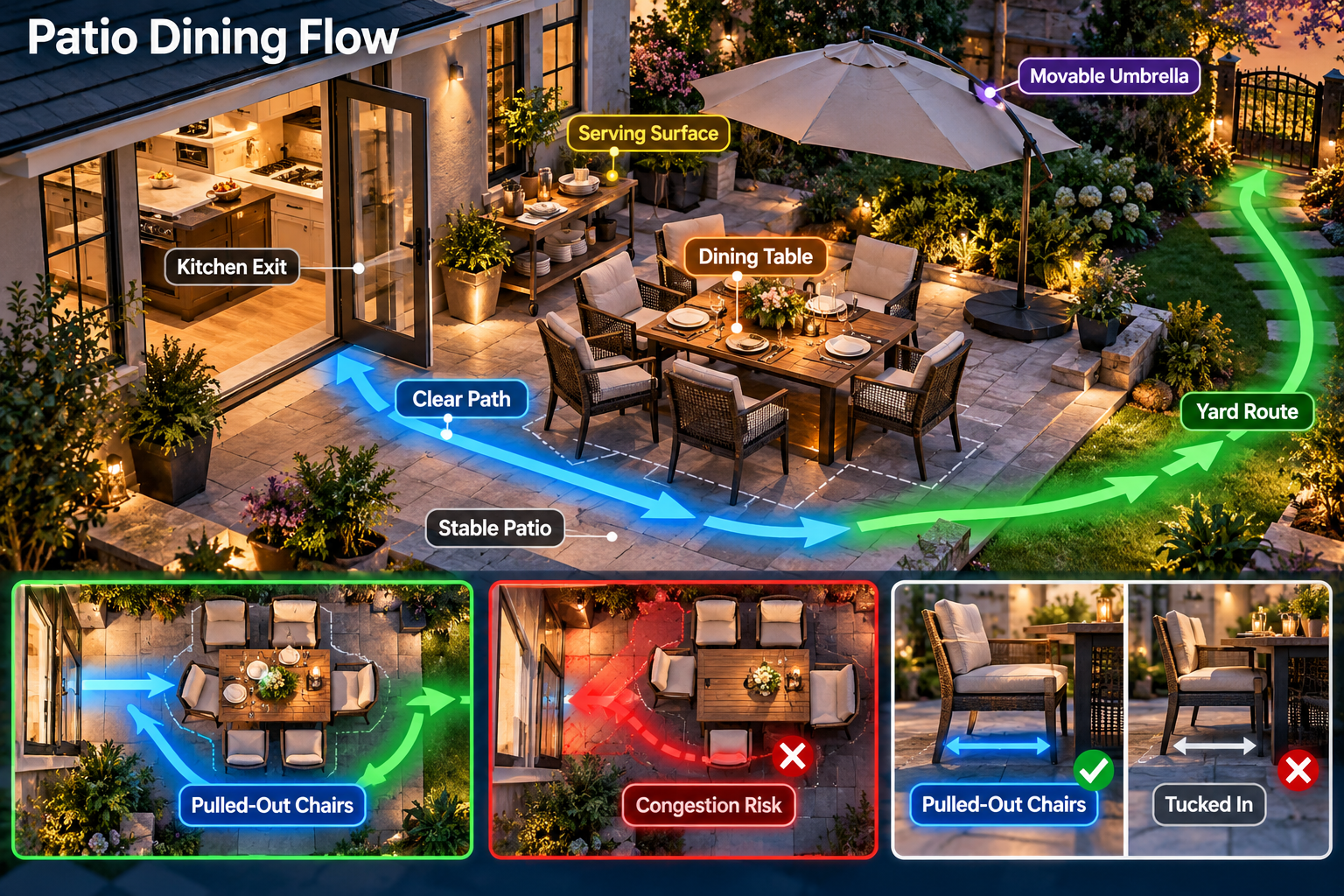
Place an outdoor dining table on a stable patio near the kitchen exit, keeping the doorway and route to the yard clear. Add a small serving surface along the edge so dishes don’t consume the entire tabletop.
This arrangement suits households that enjoy outdoor meals without needing a second kitchen. Existing patio furniture and a movable umbrella can keep the project modest.
The main limitation is congestion near the house. Check the layout with chairs pulled out, not tucked neatly beneath the table.
2. Dining And Lounging Under A Pergola
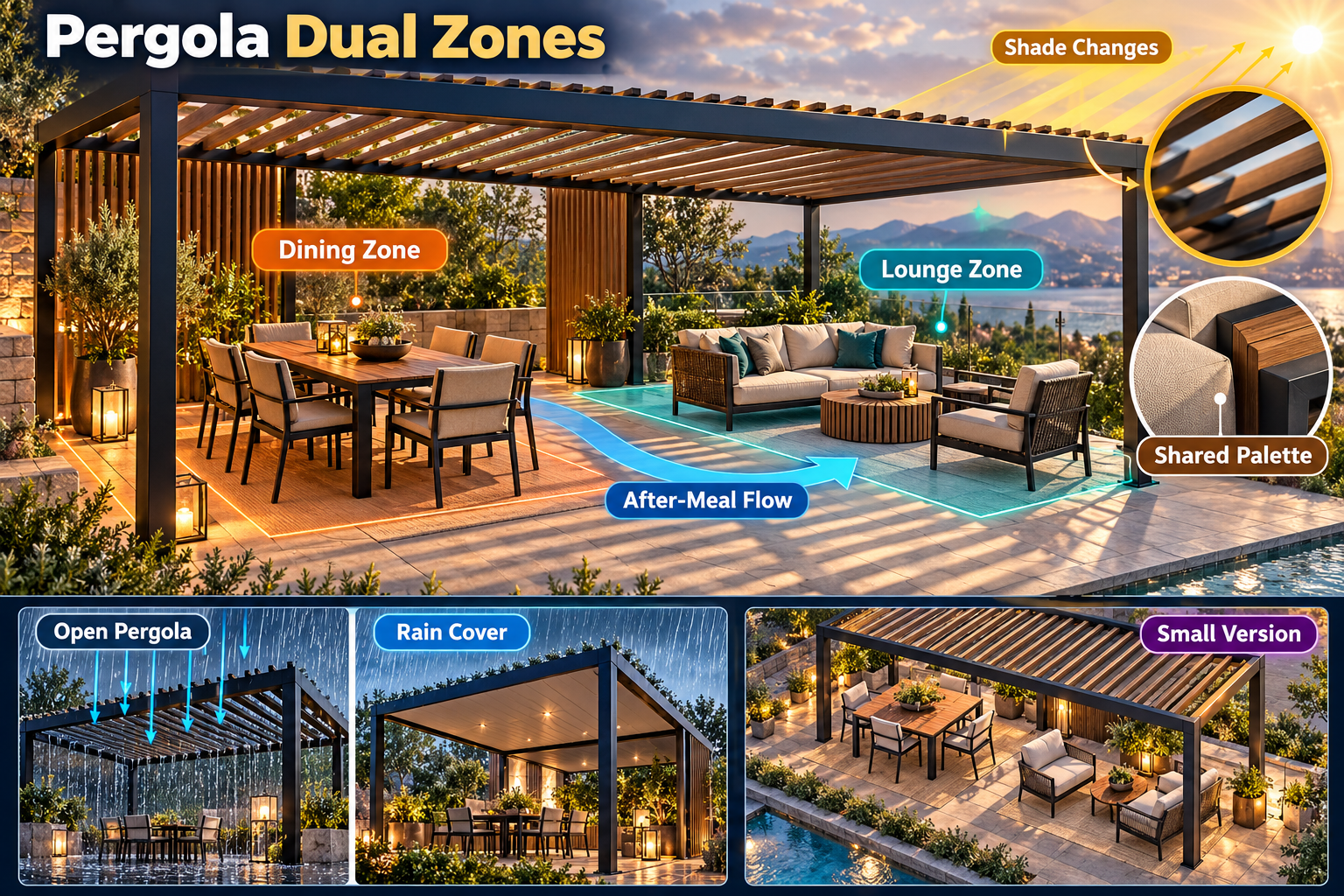
Arrange a dining table at one end of a pergola and a small conversation group at the other. Repeat a few materials or colors across both areas so they feel connected.
This works well when guests tend to linger after eating. A smaller version can pair a table with two lounge chairs instead of a full outdoor sofa.
An open pergola provides varying shade, depending on its structure and the sun’s position. Rain protection requires a roof or covering specifically designed for that purpose.
3.covered Lounge For Watching Games
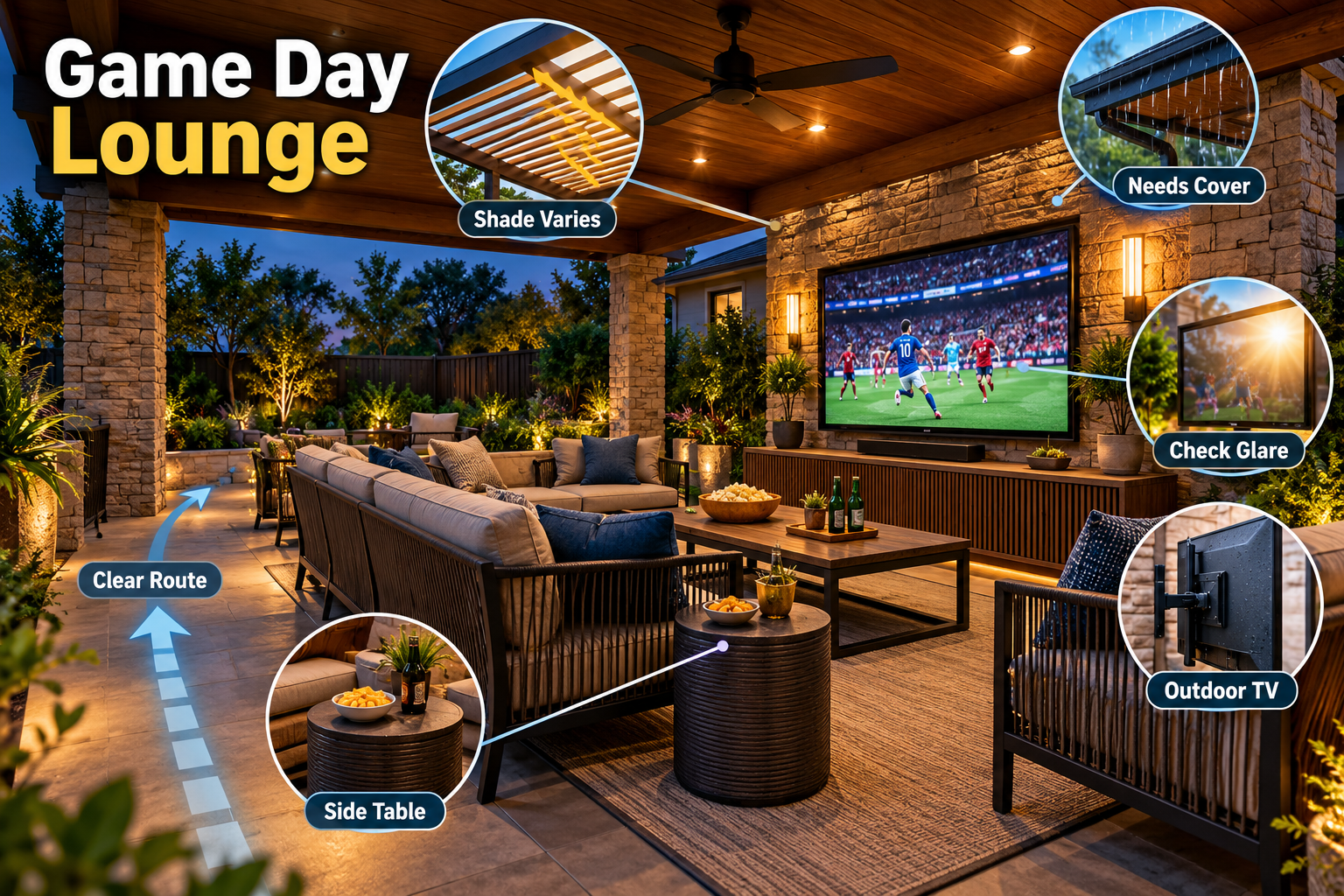
Under a suitable pavilion or patio roof, orient seating toward a display while leaving a route behind or beside the chairs. Side tables give guests somewhere to put food without needing a large dining setup.
It’s a useful choice for regular sports viewing and casual snacks. Furnishing an existing covered patio is a simpler starting point than constructing a new shelter.
Check daytime glare before choosing the screen position. A roof doesn’t make an indoor TV suitable for outdoor exposure; equipment must match its intended installation conditions.
4. Fire Pit Patio For Conversation
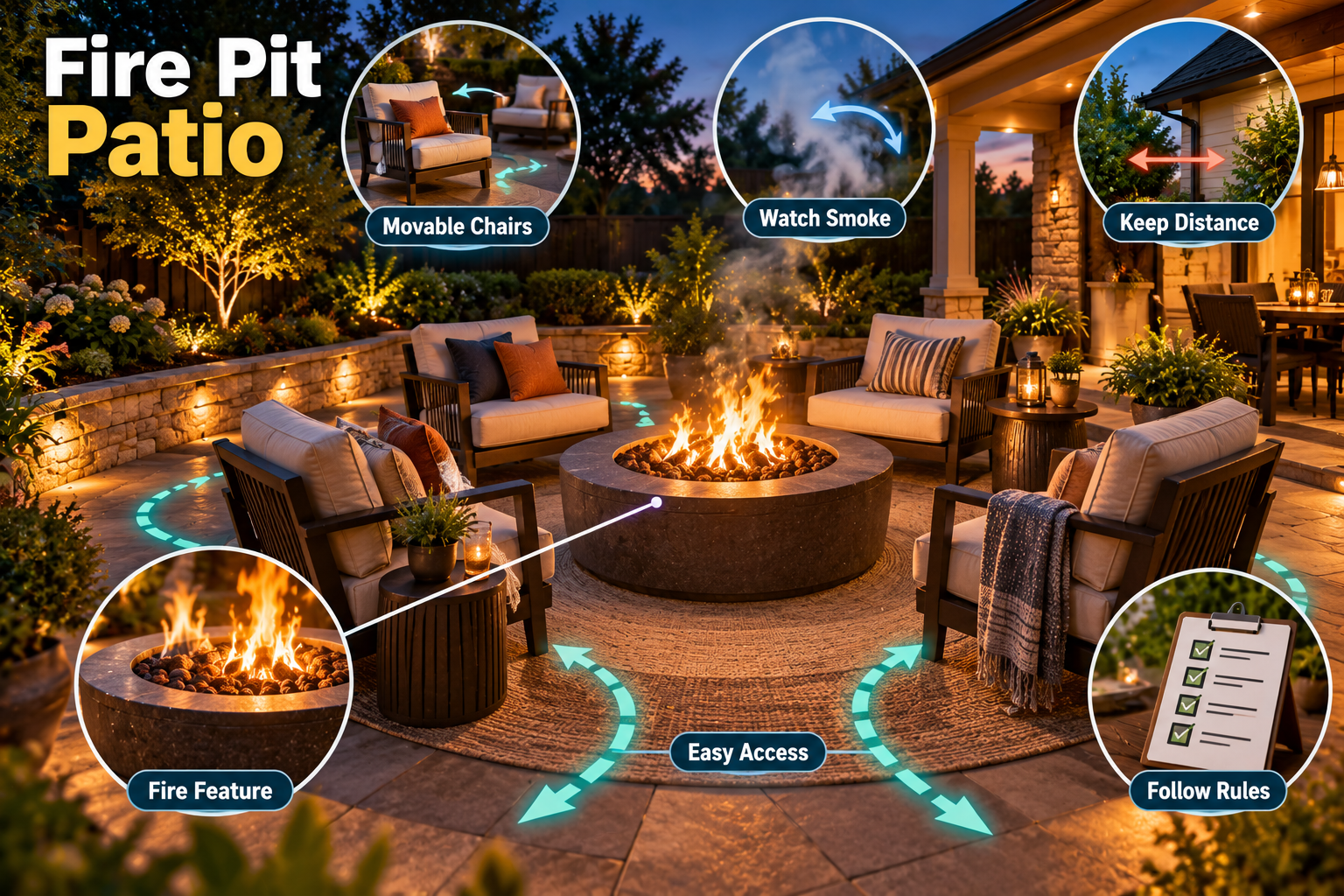
Use a fire feature as the center of a conversation area, with chairs arranged so guests can enter and leave without stepping close to the heat.
This layout suits cooler-evening gatherings where conversation is the main activity. Movable chairs and an appropriately installed freestanding fire pit offer more flexibility than built-in benches.
Smoke can make certain seats uncomfortable. Follow the fire feature’s instructions, check local restrictions, and account for nearby structures, planting, and combustible furniture.
5. Grill Station With A Separate Serving Area
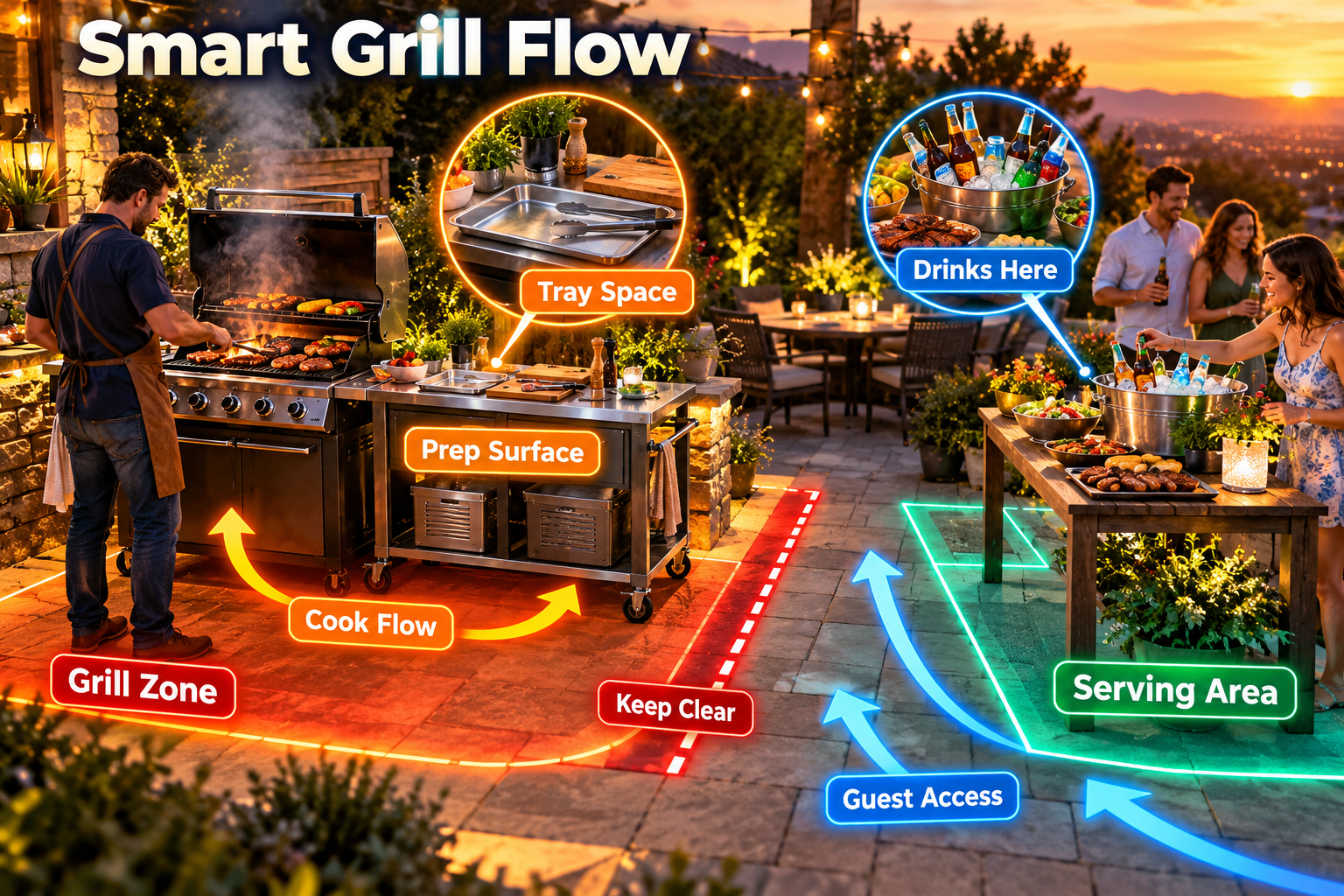
Keep the grill and preparation surface together, then position drinks and finished food where guests can reach them without entering the cooking space.
This suits barbecue gatherings without the expense of a full outdoor kitchen. A suitable outdoor preparation cart and a separate serving table may be enough.
The detail beginners often miss is somewhere to set trays beside the cooking area. Keep that surface for the cook rather than allowing it to become the drinks station.
6. Outdoor Kitchen With Nearby Dining
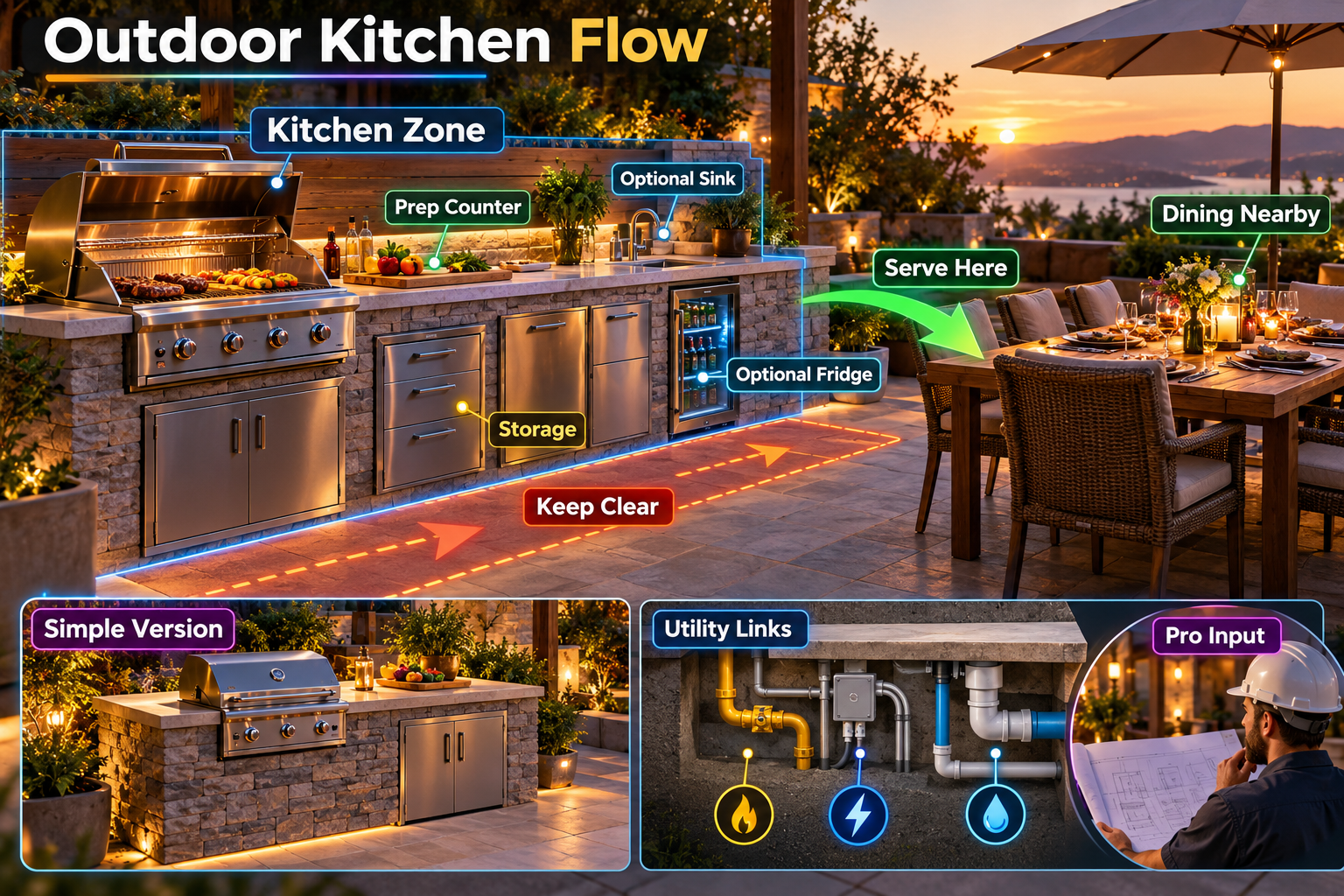
Group cooking, preparation, and storage into a dedicated kitchen area, with dining close enough for convenient serving but outside the working route.
This arrangement makes sense for frequent outdoor cooks who want more permanent facilities. Start by deciding which appliances you’ll actually use; a sink and refrigerator aren’t automatic requirements.
Construction and utility connections increase the commitment. A grill-and-counter arrangement can provide a simpler version, while permanent gas, electrical, and plumbing work needs appropriate professional input.
7. Garden Lounge With A Drinks Cart
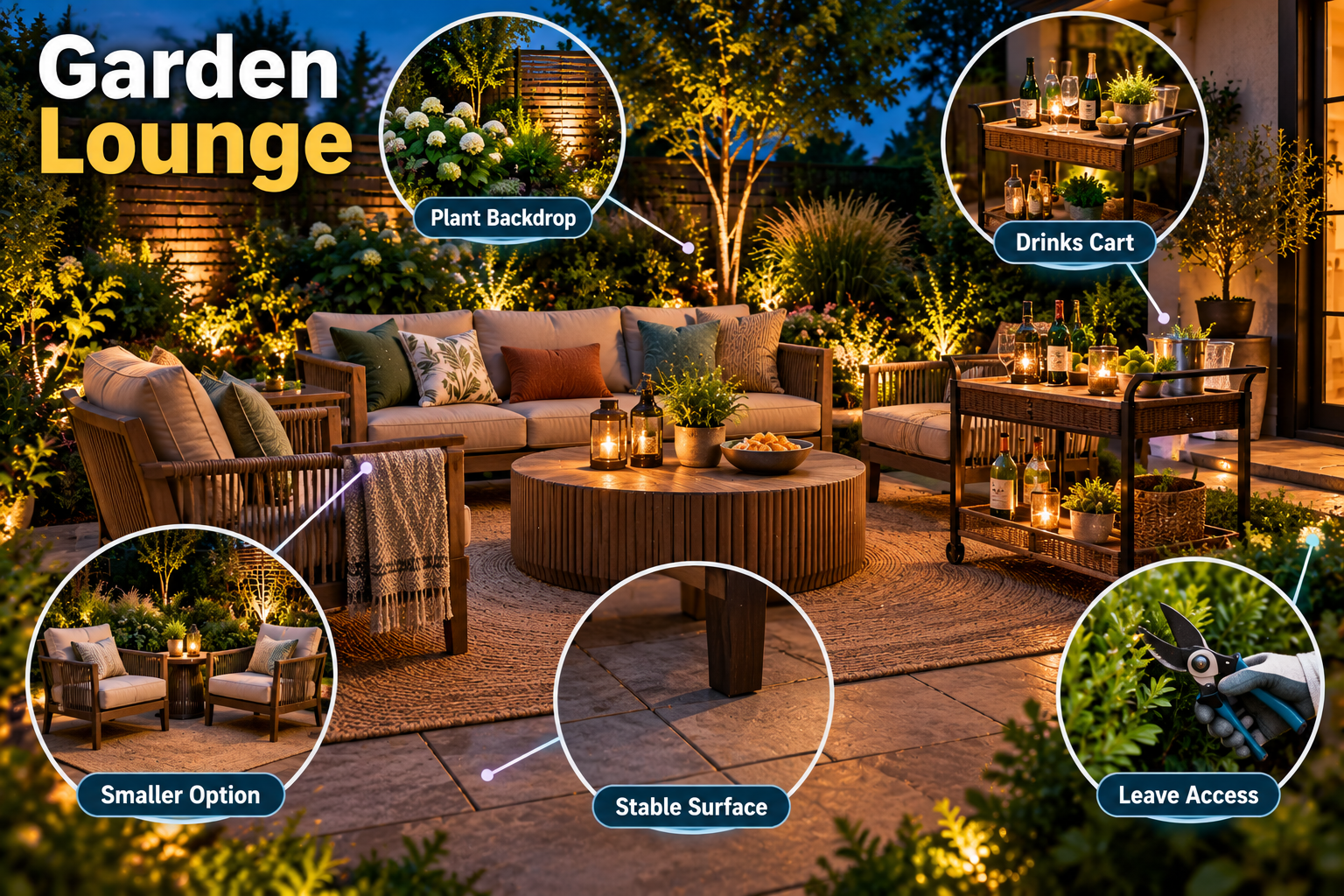
Arrange a sofa and chairs around a low table, with planting or a selective screen providing a comfortable backdrop. Park a drinks cart at the edge of the seating group.
This is a good fit for conversation, coffee, and relaxed evening visits. Two comfortable chairs and a side table can establish the same idea in a smaller space.
Garden-adjacent seating needs practical upkeep. Leave access for pruning and choose a surface that supports furniture reliably rather than placing chair legs directly on soft soil.
8. Flexible Backyard Movie Area
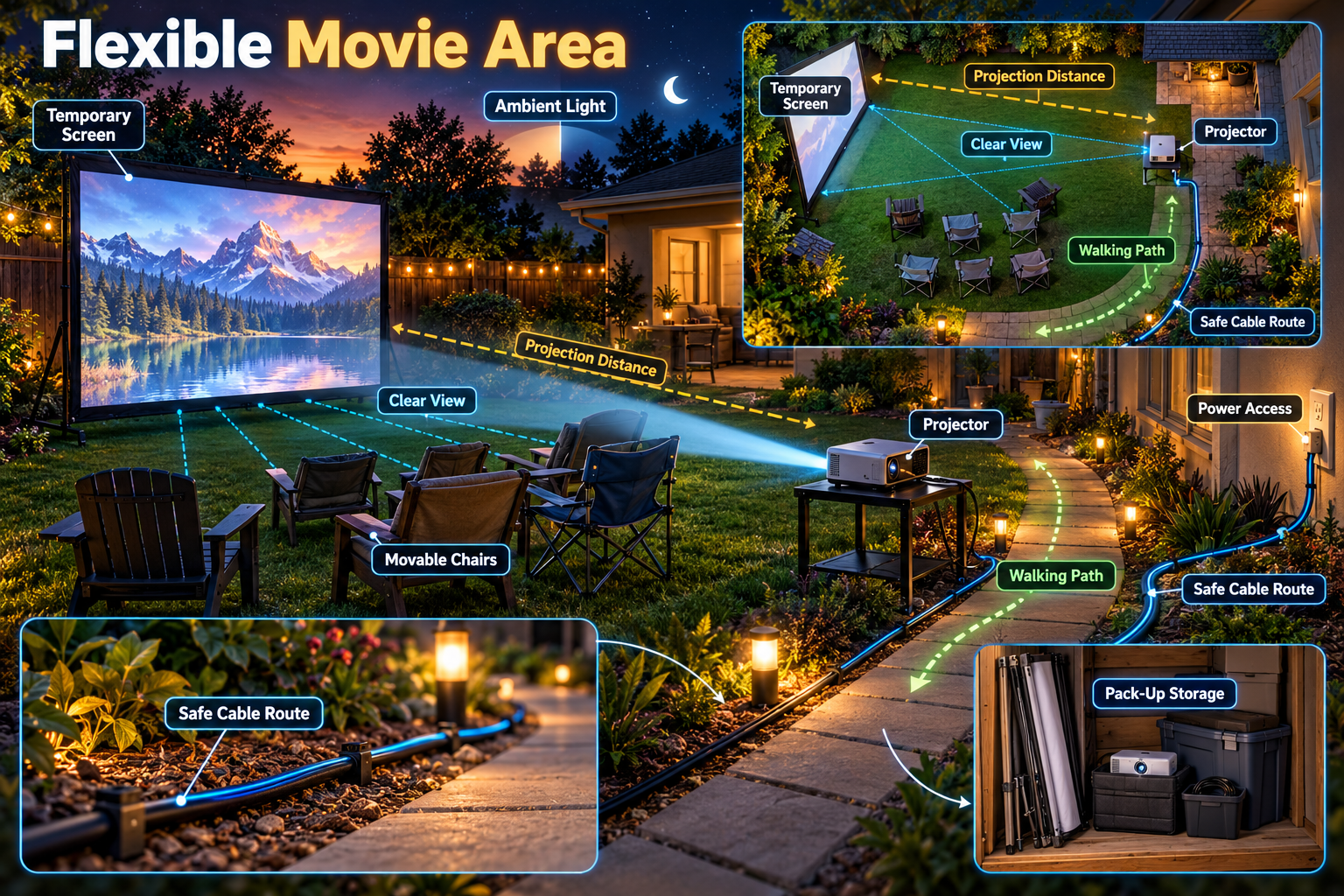
Position a temporary screen where viewers have an unobstructed view, then arrange movable seating facing it. Keep the projector and cable routes away from guest movement.
This suits occasional movie nights without dedicating the yard to a permanent media installation. Existing chairs can replace specialty theater seating.
Plan for pack-up as carefully as setup. Check projection distance, ambient light, suitable power arrangements, and where the screen and equipment will be stored afterward.
9. Lawn Games Beside A Seating Patio
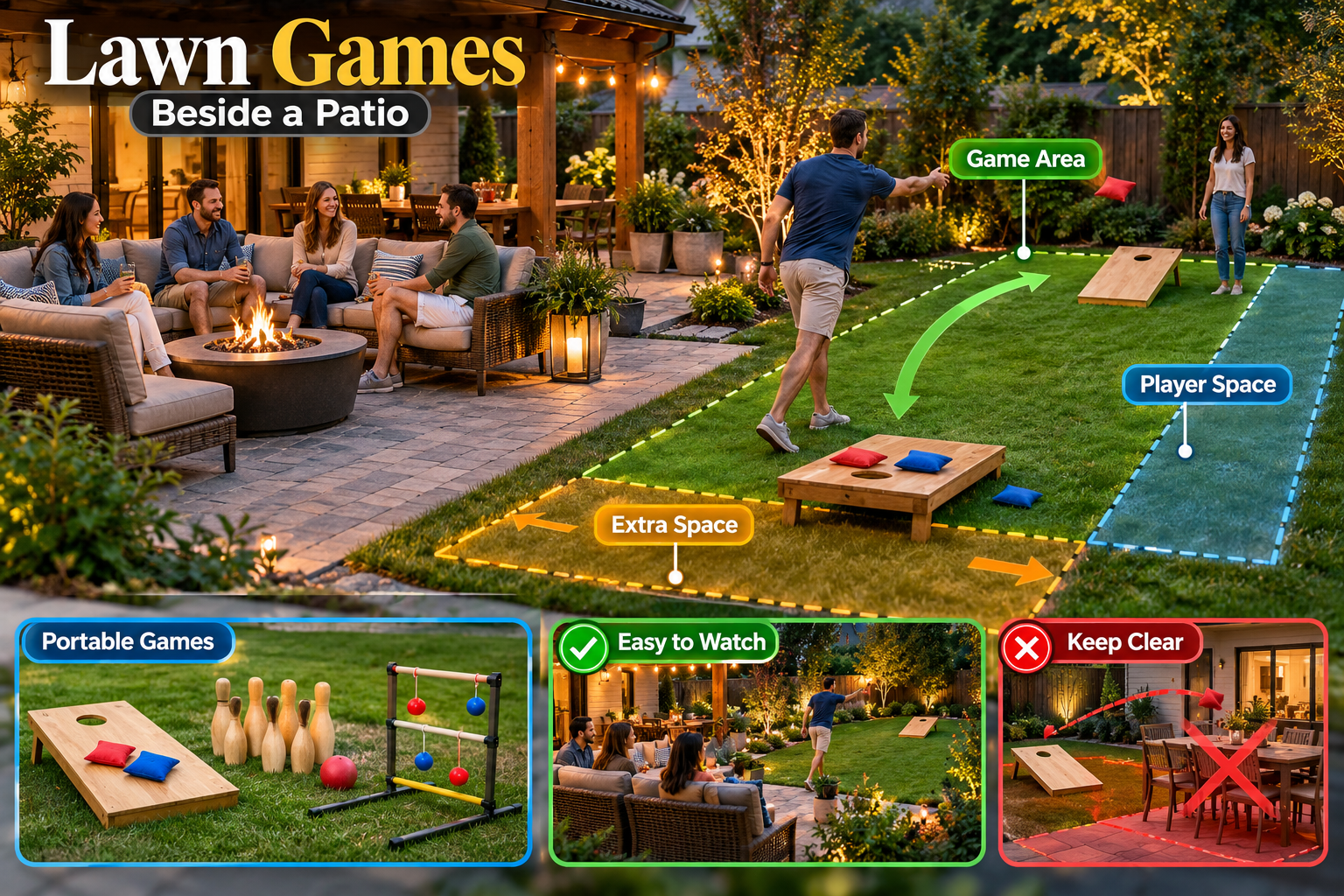
Place games on an open area beside the patio, allowing seated guests to watch without sitting inside the playing space.
This works for gatherings where some people want activity and others prefer conversation. Portable games let the lawn return to ordinary use afterward.
Allow space for the game itself, player movement, and stray throws. Avoid aiming play toward dining tables, windows, or the main route through the yard.
10. Small Courtyard With Multipurpose Seating
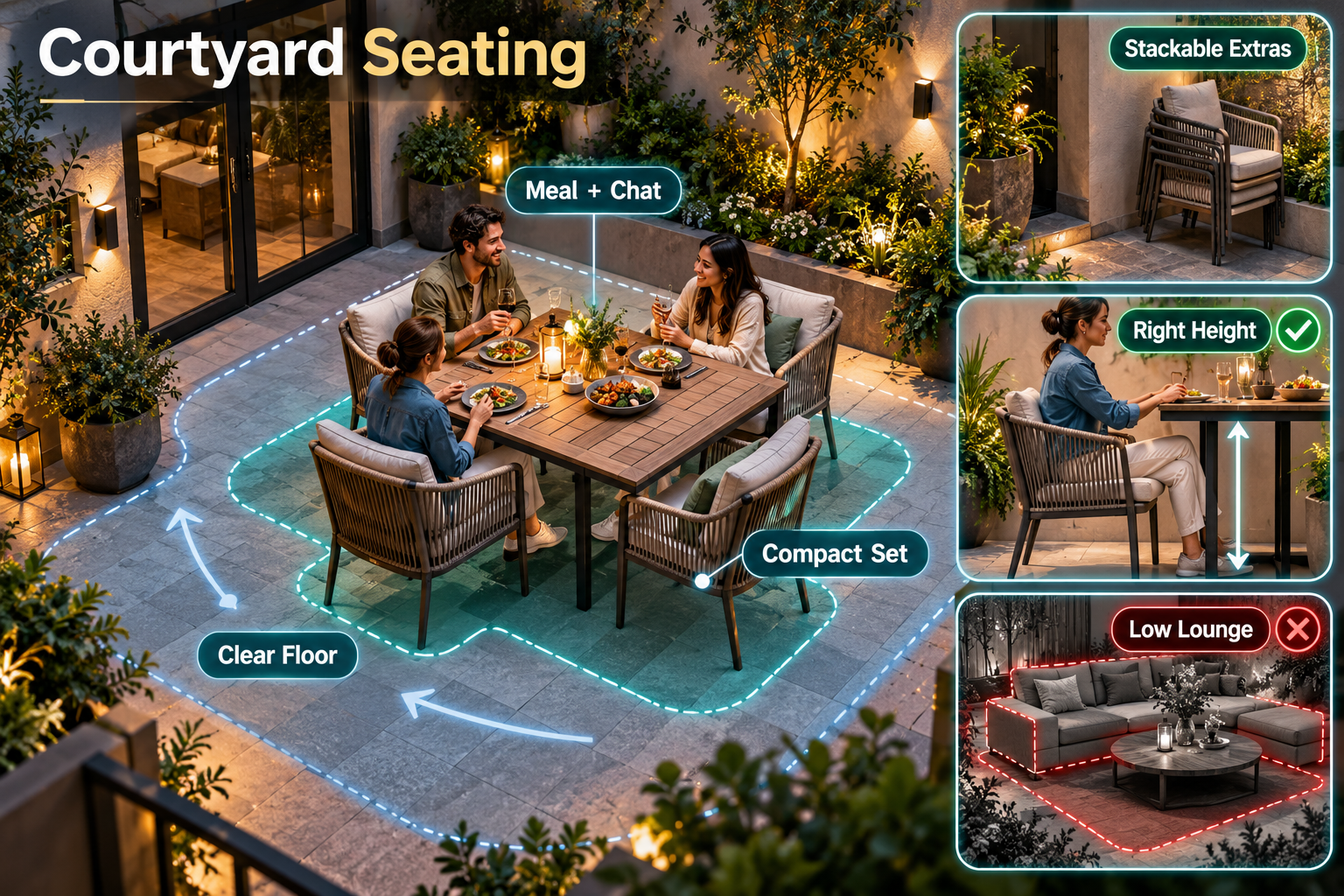
Choose one seating arrangement that can handle both meals and relaxed conversation. A compact dining set with comfortable chairs often works better than squeezing in separate dining and lounge groups.
This is one of the more practical small backyard entertainment designs because it limits duplicated furniture. Stackable chairs can add occasional seating without occupying the courtyard every day.
Watch table height and seat compatibility. A low lounge table may suit drinks but be awkward for dinner, while bulky furniture can leave little usable floor space.
11. Connected Gathering Areas In A Narrow Yard
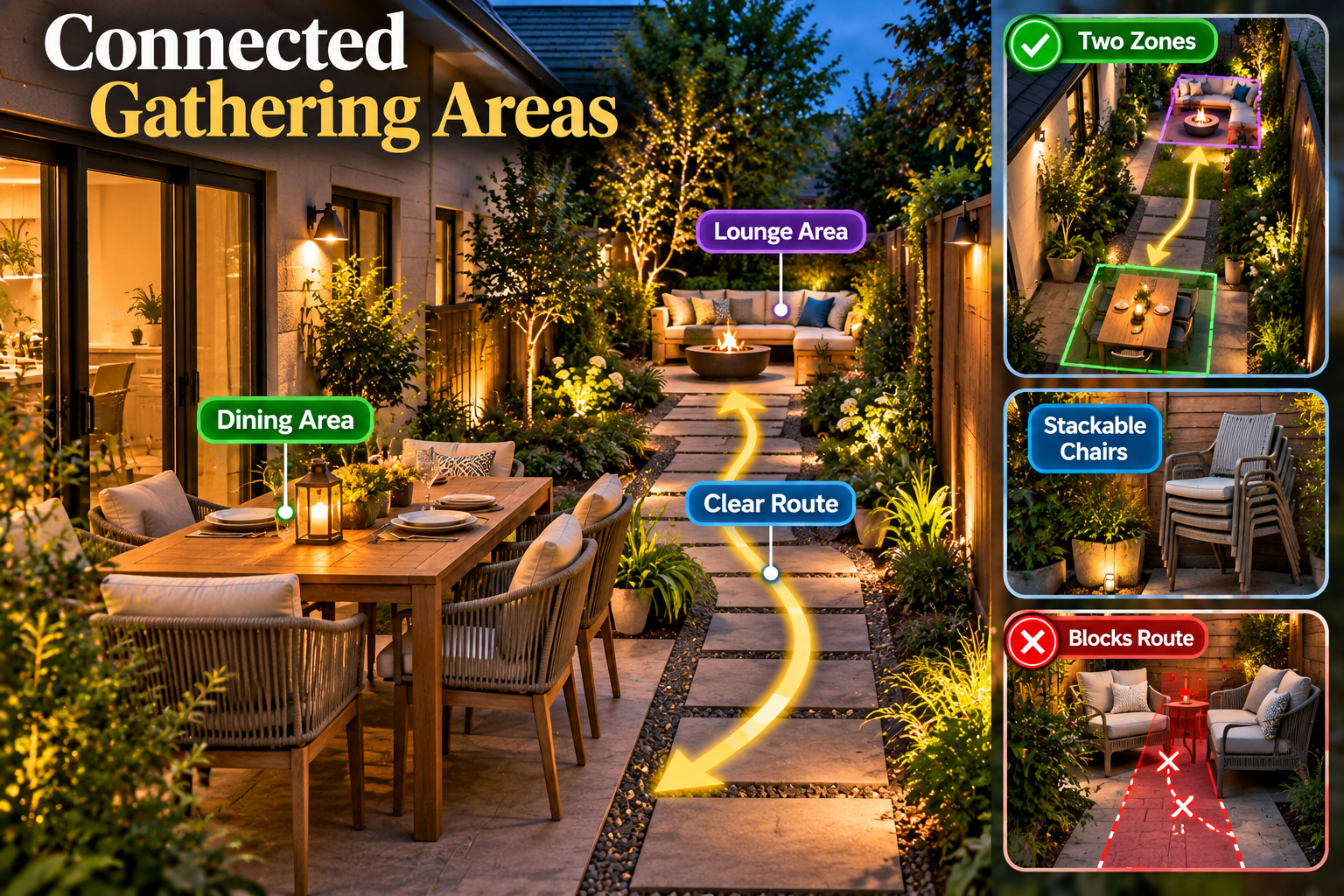
Use the yard’s length to create smaller destinations: dining nearer the house, a lounge farther along, and a clear route connecting them.
This suits narrow spaces where one large furniture group would block passage. A table and a simple bench can establish two gathering points without extensive construction.
The limitation is movement between areas. Avoid creating a corridor that passes through chair positions, and use planting selectively so the yard doesn’t feel crowded.
12. Family Patio Beside An Open Play Area
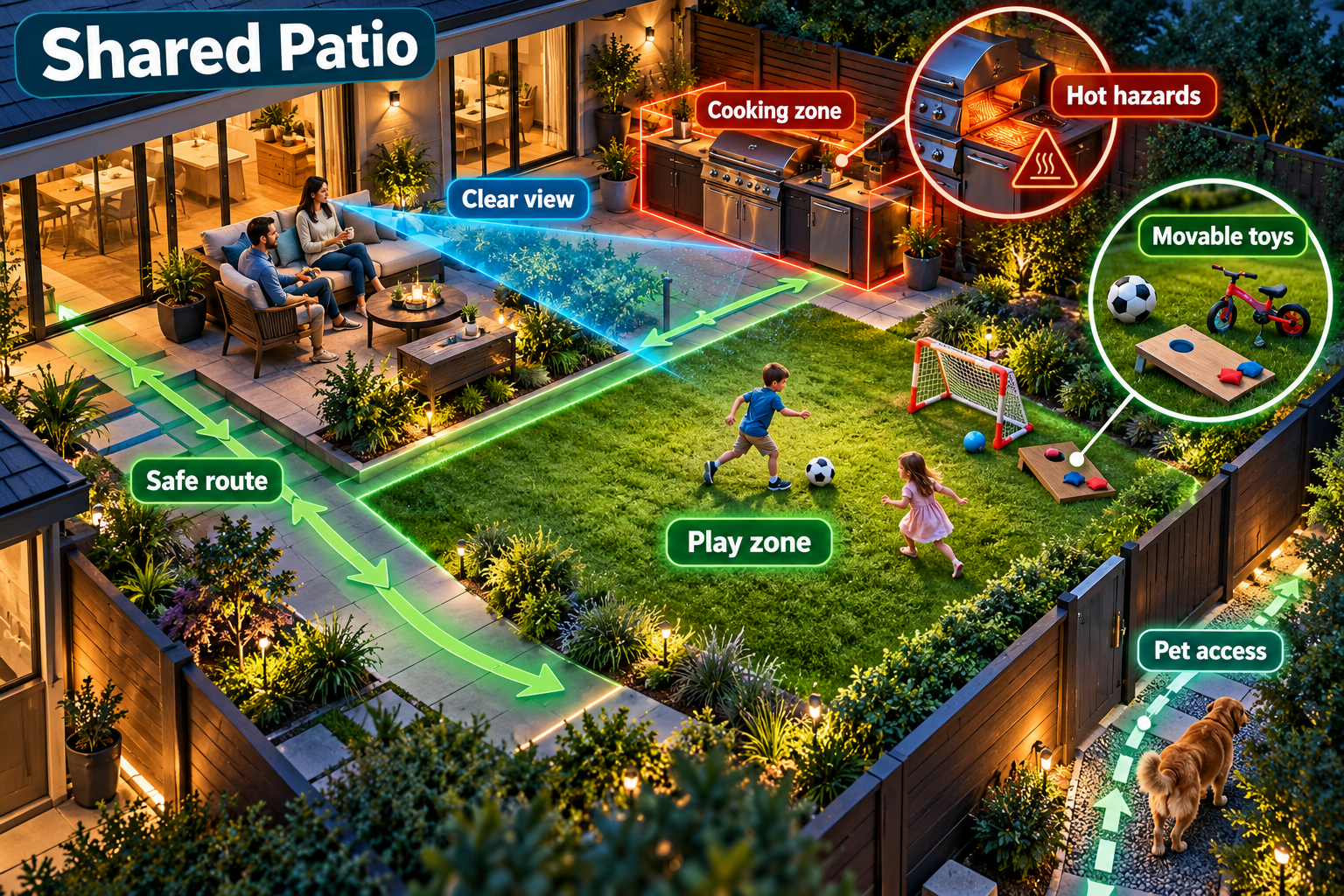
Position adult seating where it has a clear view of an adjacent open area. Keep the route between the house and play space separate from cooking equipment.
This suits households that use the backyard for both guests and everyday family time. Movable toys and games preserve flexibility better than filling the yard with permanent activities.
Open sightlines support supervision but don’t replace it. Keep hot appliances, fire features, cords, and other hazards outside play routes, and preserve access for pets and routine maintenance.
How Do You Choose The Right Design For Your Backyard?
Choose a design around your usual gatherings, the space available after furniture is in use, and the work you’re willing to maintain. Then check sun exposure, house access, and existing site conditions. The most suitable layout supports your main activity without making ordinary backyard use inconvenient.
Start With How You Entertain
Think about a typical gathering rather than your largest possible party.
Do guests sit down for dinner, chat while food cooks, watch a game, or move between activities? Pick one primary use and one supporting use. A small yard may only need dining plus conversation; a larger yard can accommodate recreation separately.
Compare Space, Budget, And Upkeep
Use this comparison to narrow your choices:
| Design | Best fit | Main tradeoff |
| Dining patio | Regular outdoor meals | Doorway congestion |
| Pergola dining and lounge | Meals followed by conversation | Cover varies |
| Covered viewing lounge | Sports and casual snacks | Equipment and glare |
| Fire pit patio | Evening conversation | Smoke and restrictions |
| Grill and serving area | Barbecue hosting | Preparation space |
| Outdoor kitchen | Frequent outdoor cooking | Utilities and upkeep |
| Garden lounge | Relaxed visits | Plant and cushion care |
| Temporary movie area | Occasional movie nights | Setup and storage |
| Games beside patio | Active gatherings | Playing clearance |
| Multipurpose courtyard | Small spaces | Furniture compromises |
| Narrow-yard destinations | Long, restricted footprints | Connecting passage |
| Family patio and play area | Everyday family use | Competing activities |
Budget for preparation as well as furnishings. New paving, grading, structures, and utility connections can change the project substantially. Keep sound existing features where they serve the plan.
Arrange Seating, Cooking, And Paths For Easy Hosting
Test your proposed patio layout before ordering furniture or committing to construction. Mark furniture positions, include chairs in their occupied positions, and walk through ordinary hosting tasks.
Check whether someone can:
- Carry a tray from the house to the table.
- Pass behind a seated guest.
- Collect a drink without blocking the cook.
- Reach the lawn without crossing a conversation group.
Measure the actual furniture you’re considering. Product photographs rarely show how much space chairs need during use.
Place refreshments along the edge of the gathering area rather than in a narrow passage. Keep preparation surfaces available for food handling, and plan an accessible waste and recycling location.
Stable surfaces matter, too. An outdoor rug can define seating visually, but it won’t correct sinking furniture legs or uneven ground.
Plan Shade, Privacy, And Lighting Around When You Gather
Choose Cover For Sun And Weather
Observe the yard at your usual hosting hours. Shade at breakfast may disappear by late afternoon.
An umbrella can suit a small table, while an awning or purpose-designed roof may serve a larger area. Compare actual coverage, attachment requirements, and weather limitations—not appearance alone.
Follow the product’s anchoring and operating instructions. Keep an indoor alternative for conditions the outdoor setup cannot safely accommodate.
Add Privacy Without Crowding The Space
Screen the view that causes discomfort rather than enclosing every boundary. A panel beside a lounge may be more useful than a tall screen around the entire patio.
Planting can soften the space, but check mature size and maintenance access. Containers also occupy floor area, so keep them outside narrow routes.
Light Paths, Food Preparation, And Seating
Give each lighting layer a job: illuminate movement routes, provide useful visibility where food is prepared, and add softer light around seating.
String lights can contribute atmosphere, but assess whether steps and surfaces remain visible. Position fixtures to limit glare toward guests, screens, and neighboring windows.
Use outdoor-suitable electrical products and cords. CPSC advises using extension cords labeled for outdoor use; permanent power needs should be assessed by a qualified electrician.
Avoid Common Backyard Entertainment Planning Mistakes
The most costly mistakes often begin before installation:
- Filling every available corner: Preserve room for movement, maintenance, and ordinary outdoor activities.
- Building for rare occasions: Permanent seating for a large annual party may make everyday use awkward.
- Adding facilities without storage: Cushions, games, covers, and media equipment need somewhere to go.
- Ignoring water movement: Have drainage concerns assessed before adding paving, structures, or lower seating areas.
- Assuming cover solves every exposure problem: Wind-driven rain, heat, and unsuitable equipment still need consideration.
- Treating fire clearance as decorative spacing: Follow appliance instructions and local requirements. USFA recommends outdoor grill use, separation from combustible surroundings, and a protected area around the grill.
Seek qualified help for structural attachments, elevated decks, permanent utilities, and significant grading. Verify applicable permits, HOA conditions, and installation restrictions before committing to permanent work.
Frequently Asked Questions
Do You Need An Outdoor Kitchen To Entertain?
No. An indoor kitchen, an outdoor dining area, and a convenient serving surface can support plenty of gatherings. Add a grill when outdoor cooking matters to you. A permanent kitchen becomes worth considering when frequent use justifies its installation, cleaning, storage, and seasonal care.
How Can You Improve An Existing Backyard On A Budget?
Start by rearranging usable furniture and clearing routes rather than replacing everything. Identify the biggest obstacle—such as missing shade, uncomfortable seating, or nowhere to serve food—and address that first. Movable furniture and staged improvements can help you test the layout before investing in permanent features.
Is An Outdoor Tv Or Projector Better For Your Setup?
An outdoor-rated TV may suit frequent viewing, including daytime gatherings, provided it matches the installation conditions. A projector can suit occasional evening movies and temporary setups. Compare ambient light, projection distance, power, weather exposure, and storage before choosing; neither option works equally well in every yard.
How Can Renters Create A Backyard Entertainment Area?
Use removable furniture, freestanding planters, portable games, and a movable serving station. Keep exits and shared access clear, and obtain permission before attaching fixtures or changing surfaces. Choose shade equipment that can be safely anchored as instructed, and check lease terms before introducing cooking or fire features.
Choose A Design That Fits Your Everyday Life
Choose the arrangement that supports the gatherings you actually enjoy. Test the furniture positions, resolve comfort and access problems, and add permanent features only when their usefulness is clear. A backyard that works comfortably for an ordinary evening will give you a stronger foundation for hosting guests.
Disclaimer
This content is for general informational purposes only. Homes, needs, preferences, budgets, and circumstances vary. Seek qualified professional advice for safety, installation, repairs, structural work, electrical, plumbing, HVAC, legal matters, or major property decisions.