
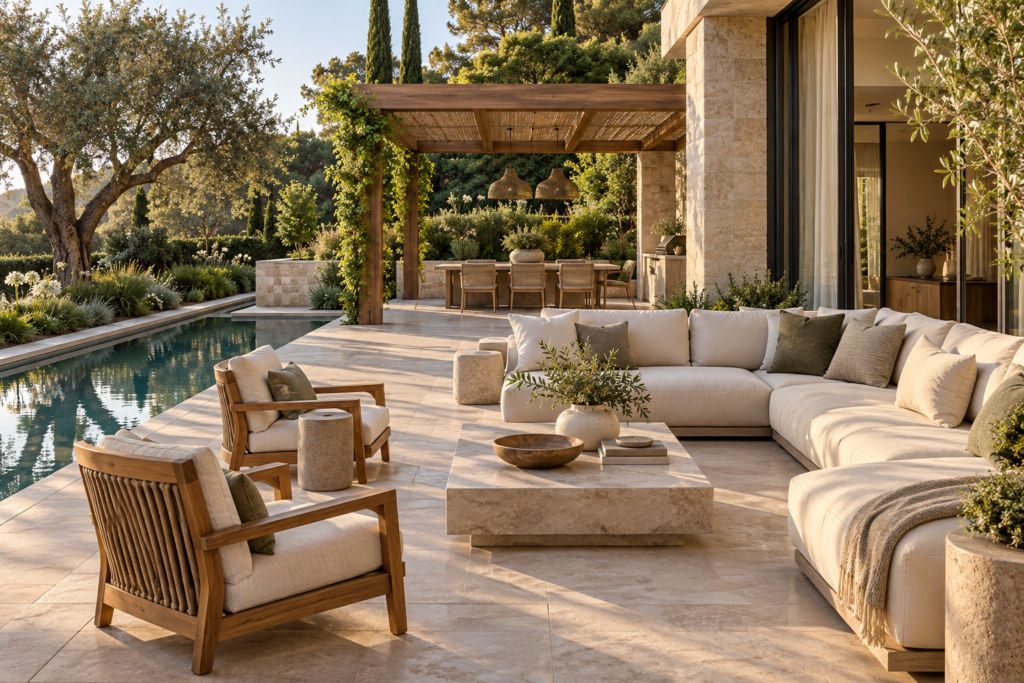
A patio can look inviting in a photograph yet feel awkward at home: the furniture crowds the door, the seating sits in afternoon sun, or the cushions have nowhere to go when it rains. The most useful outdoor patio inspiration helps you picture both the finished space and how you’ll actually use it.
Start with one activity you’d like to enjoy outside, whether that’s morning coffee, dinner, reading, or conversation. These 15 ideas offer different ways to build around that activity, with options for small spaces, existing concrete patios, and gradual updates.
Short Definition
Outdoor patio inspiration brings together design ideas for arranging, furnishing, and decorating a patio. It helps readers imagine an inviting outdoor space and choose features that suit their activities, available room, and budget.
Homepatiolife Mission Statement
Homepatiolife helps homeowners, renters, and home lovers create comfortable, stylish spaces through practical ideas and clear guidance for everyday decisions.
15 Patio Ideas For Different Spaces And Budgets
1. Create A Bistro Corner For Everyday Meals
A small table and two chairs can give an underused corner a clear purpose. Picture a simple café-style arrangement beside a planter, with enough tabletop space for breakfast or an evening meal.
Before buying a bistro set, check the layout with the chairs pulled out. A table that fits neatly against a wall may become awkward once someone sits down.
Keep spending focused on comfortable seating. Matching planters and decorative accessories can wait.
2. Make A Shaded Reading Nook
One comfortable chair, a side table, and shade can be enough to create a retreat. This works well when a patio is too small—or too quiet in its daily use—to justify a full conversation set.
Observe the spot during your usual reading time. Morning shade doesn’t tell you much about late-afternoon comfort.
Start with a suitable chair you already own, then add what’s missing. Check that any furniture moved outdoors is intended for that exposure.
3. Arrange Movable Chairs For Conversation
Two or three separate chairs around a shared table offer more flexibility than a large sofa. They can face each other for conversation or turn toward the garden when you’re sitting alone.
For a cohesive look, repeat one element, such as frame color, while allowing the chair shapes to vary.
Lightweight pieces are easier to rearrange, but consider local wind exposure and storage. Test seat height and back support rather than judging comfort from photographs.
4. Give Dining And Lounging Their Own Areas
A larger patio often feels more purposeful when meals and relaxation have separate places. Position the dining area where serving food is convenient, then arrange lounge seating around a different view or focal point.
Keep an obvious route between the house, garden, and seating areas. People shouldn’t have to squeeze behind occupied chairs.
You don’t need to furnish both zones at once. Complete the area you’ll use most, then expand when the budget allows.
5. Turn A Narrow Side Patio Into A Usable Retreat
A slim bench or compact pair of chairs can make a narrow patio useful without filling its length. Keep furnishings grouped in one suitable spot rather than scattering obstacles along the route.
Vertical interest can come from a wall color, permitted trellis, or carefully placed planting.
Measure door swings and access points first. Where the side yard serves as a necessary passage, keeping it open takes priority over adding more seating.
6. Keep A Family Patio Flexible
A family patio may need to support lunch, play, and occasional guests on the same day. Movable chairs and stackable seating let the arrangement change without permanently occupying the center.
Create a comfortable seating edge and leave useful open space nearby. An outdoor storage piece may help organize accessories, provided it suits its contents and location.
Avoid buying a large set simply because it offers more seats. Extra furniture can become something everyone has to work around.
7. Refresh Plain Concrete With A Coordinated Setup
A plain concrete patio doesn’t always need a new finish. A coordinated seating group, a few substantial planters, and one accent color can make the existing surface feel intentional.
For example, dark chair frames, muted cushions, and terracotta pots create a clear visual direction without changing the slab.
Assess cracks, uneven sections, and recurring water problems separately. Furniture and rugs can change appearance, but they don’t correct an underlying surface issue.
8. Mix Secondhand Pieces Into A Cohesive Seating Area
Secondhand outdoor furniture can stretch a budget when its condition and dimensions suit the space. Look for a common thread—similar wood tones, dark frames, or repeated cushion colors—to connect different pieces.
Check joints, feet, fasteners, and visible deterioration before purchasing. Include transport, repairs, and replacement cushions in your decision.
A low purchase price may be less useful than a slightly more expensive piece that’s ready to use. Avoid taking on repairs you can’t confidently assess.
9. Define An Outdoor Living Room With A Rug
An outdoor rug can visually gather a sofa, chairs, and table into one seating area. It’s particularly helpful on a broad, plain surface where the furniture otherwise appears disconnected.
Choose the size around the seating arrangement rather than buying a small rug to fill the center. Keep edges clear of doors and routes.
Check the rug’s care instructions and compatibility with the surface underneath. It adds another item to clean and may need lifting for drying or storage.
10. Build A Garden Retreat With Containers
Group containers around the edges of a seating area to bring planting closer to where you spend time. A few repeated pot shapes can make the arrangement feel calmer than a collection of unrelated small containers.
Choose plants for the actual light, climate, and care you can provide. Leave access for watering without moving furniture every time.
Begin with a manageable group. Larger displays also bring costs for containers, growing media, watering, and seasonal replacement.
11. Screen An Overlooked Seating Corner
Privacy works best when you identify the view you want to interrupt. Sit in the chair and check whether the problem comes from a nearby walkway, a side window, or an elevated neighboring property.
A suitably positioned screen or planting group may address one seating corner without enclosing the whole patio.
Consider mature plant size, wind exposure, and any permission requirements. A decorative panel that looks substantial in a photograph may need specific support or anchoring.
12. Add Umbrella Shade Where People Gather
A patio umbrella can provide targeted shade without committing to a permanent structure. Position it around the seating you use most, then check how the shade moves during that part of the day.
Account for the base as well as the canopy. A large base beside a compact table can consume valuable foot space.
Follow the manufacturer’s requirements for the compatible base, placement, and wind conditions. Include those supporting components when comparing costs.
13. Turn Existing Cover Into A Comfortable Lounge
An existing porch roof or covered patio offers a useful starting point for lounge seating. A compact sofa and side table can make it feel like a place to settle rather than pass through.
Choose furnishings according to the shelter’s actual protection. Wind-driven rain and low-angle sun may still reach beneath a roof.
Keep the first arrangement simple. Spend time there before deciding whether curtains, additional screening, or more furniture would improve it.
14. Create An Inviting Patio For Evening Use
Plan lighting around what you need to see: the table, the route back inside, and changes in level. Decorative light can then add atmosphere without becoming the only source of visibility.
A rechargeable table lamp may suit a small conversation area; an appropriate fixed fixture may serve a frequently used covered patio.
Use equipment rated for its outdoor setting and inspect cords for damage. Avoid arrangements that put cables across walking routes.
15. Carry Your Indoor Style Outside
Repeat a few familiar elements from the adjoining room to make the patio feel connected to your home. That might mean an olive-green cushion, curved chair backs, or warm wood tones.
The outdoor pieces don’t need to match the indoor furnishings exactly. Similar colors and shapes can create continuity while allowing different materials.
Choose outdoor suitability first, then refine the look. Indoor furniture or flooring shouldn’t be moved outside solely because its appearance fits.
How To Choose The Right Ideas For Your Patio
Choose patio ideas by matching your main activity to the usable space, sun exposure, privacy needs, and upkeep you can manage. Shortlist a few arrangements, then test their furniture footprints before buying. A smaller setup that works comfortably is more useful than a fuller arrangement that restricts movement.
Use the patio’s main limitation to narrow your choices:
| Your main challenge | A useful starting point |
| Very little room | Bistro corner or single reading seat |
| Too much sun during use | Targeted shade before additional decoration |
| Awkward narrow layout | Slim furnishings outside the main route |
| Large, disconnected space | One complete activity zone |
| Overlooking neighbors | Screening positioned for the actual sightline |
| Changing family activities | Movable seating and open space |
Mark proposed furniture positions with removable tape or another surface-safe method. Include chairs in use, door movement, and the route someone carrying a tray would take.
Renters should also check which changes require permission. Portable furniture offers flexibility, but attached screens, drilled fixings, and alterations to existing structures may involve additional restrictions.
How To Refresh Your Patio Without Overspending
Refresh a patio on a small budget by keeping suitable items, rearranging the layout, and addressing the biggest obstacle to using it. Buy in stages rather than purchasing a complete look at once. Include delivery, supporting hardware, care, and storage in the cost of any new addition.
Sort your plans into three groups:
- Keep: Sound furniture, useful containers, and surfaces that remain suitable.
- Change now: The missing element that would make the patio comfortable or functional.
- Buy later: Accessories and extra seating that aren’t needed for everyday use.
For a hot, exposed patio, that missing element may be shade. For a furnished but awkward patio, rearrangement might do more than another purchase.
Keep decorating and construction budgets separate. Extending a patio or installing a fixed structure involves different decisions from replacing cushions or adding plants.
Practical Checks Before You Make Changes
Check Surfaces, Drainage, And Clear Routes
Look at the patio after rain as well as on a dry day. Note recurring puddles, uneven areas, and water collecting near the house before covering the surface or extending it.
Persistent drainage problems or movement deserve assessment before cosmetic work. Avoid assuming a new surface layer will resolve them.
Walk through the proposed arrangement with doors open and chairs occupied. Preserve convenient access to gates, utilities, and storage.
Match Materials To Exposure And Storage Space
“Outdoor” doesn’t mean every product suits every location or requires the same care. Read the manufacturer’s guidance for exposure, cleaning, and storage before choosing furniture, rugs, or cushions.
Think through the routine: where will wet accessories dry, and where will seasonal items go? Fewer textiles or cushion-free chairs may suit a patio without nearby storage.
Choose a care routine you’ll realistically maintain.
Know Which Changes Need Permission Or Professional Help
Check applicable rental terms, HOA restrictions, and local requirements before installing fixed structures or making substantial alterations.
Use appropriately qualified help for permanent electrical work, structural attachments, and significant drainage changes. Shade structures and other installations should follow their specific instructions and site requirements.
Keep the scale of the project clear: arranging a portable seating corner is a different undertaking from attaching a cover to the house.
Frequently Asked Questions
Can You Make A Patio Inviting Without A Pergola?
Yes. Comfortable seating, an intentional layout, planting, and suitable lighting can make a patio inviting without a pergola. Where shade is needed, an appropriately selected umbrella or existing sheltered spot may be sufficient. First identify what would make the space more usable before choosing a structure.
Can You Have A Comfortable Patio Without Cushions?
Yes. Well-shaped chairs with suitable back support, armrests, or sling seats can offer comfortable seating without separate cushions. Try the furniture where possible, since fit varies between people. Check exposure and care requirements too; eliminating cushions simplifies storage, but it doesn’t remove all maintenance.
Is Gravel A Practical Choice For A Small Sitting Area?
Gravel can suit some sitting areas, but stability, drainage, furniture legs, and access needs affect its usefulness. Loose material may shift beneath narrow chair feet or make wheeled access difficult. Assess the site and intended users before choosing it, rather than treating it as a surface that needs no preparation.
What Can You Do When There Is No Outdoor Electrical Outlet?
Outdoor-rated rechargeable or battery-powered lights can provide localized illumination without a nearby outlet. Solar options may also suit some locations, depending on sun exposure and the light needed. For reliable fixed lighting or a new outlet, consult a qualified electrician rather than improvising a permanent extension-cord arrangement.
Start With One Patio Idea That Fits Your Life
Use outdoor patio inspiration to choose one arrangement you’ll enjoy regularly. Check its footprint, exposure, care needs, and total cost, then build around that decision. A comfortable place for coffee or conversation gives the patio a purpose—and helps you see what, if anything, it needs next.
Disclaimer
This content is for general informational purposes only. Homes, needs, preferences, budgets, and situations vary. Seek qualified professional advice for safety, installation, repair, legal, structural, electrical, plumbing, HVAC, or major property decisions.