
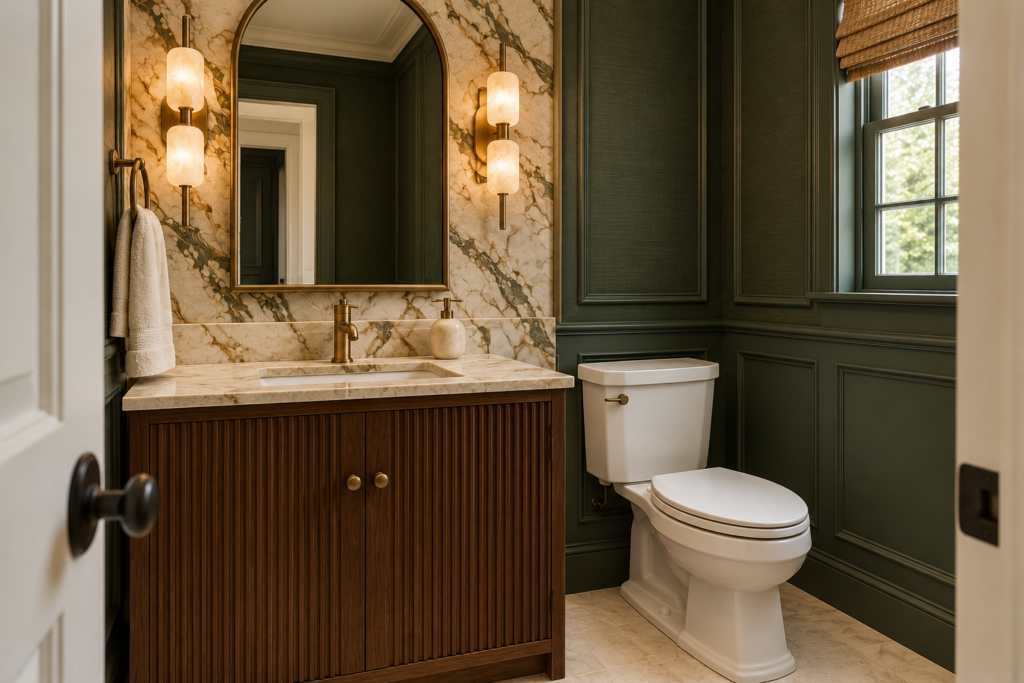
A powder room can feel unfinished even when there’s barely room to add anything. The sink needs soap, guests need a hand towel, and spare toilet paper needs somewhere to go. Another decorative object may simply get in the way.
The most useful powder room decorating ideas give walls, lighting, mirrors, and everyday essentials a stronger role. You can introduce bold pattern or keep the room quiet and understated while leaving space to wash hands comfortably.
Start with the part of the room that feels least considered. These 15 ideas offer different ways to improve it—you don’t need to combine them all.
Short Definition
Powder room decorating ideas are ways to personalize a half bath through color, wallpaper, mirrors, lighting, and accessories. They help turn a small, plain room into a coordinated space while preserving everyday function.
Homepatiolife Mission Statement
Homepatiolife helps homeowners, renters, and home lovers make informed, practical choices for comfortable, stylish spaces that work for everyday life.
15 Powder Room Decorating Ideas To Try
Let Wallpaper Be The Main Decorative Feature
Wallpaper gives a small half bath personality without occupying counter or floor space. A botanical print, loose geometric pattern, or textured-looking design can provide enough interest to keep accessories simple.
For example, green-and-cream wallpaper could sit alongside a plain mirror, cream hand towel, and existing white sink. There’s no need to repeat the pattern in every detail.
Hold a sample beside the floor and countertop before choosing. Check the manufacturer’s surface preparation, cleaning, and room-suitability instructions, especially near the sink.
Set The Mood With A Considered Paint Color
Choose paint according to the atmosphere you want and the finishes you’re keeping. Warm off-white can support a quiet scheme, while olive, navy, or burgundy can create a more enclosed, intimate feeling.
Neither approach automatically makes every small room look larger. Lighting, contrast, and personal preference affect the result.
Test samples beside the vanity, toilet, and trim under the lights you actually use. A color that looks appealing near the doorway may feel quite different beside a warm-toned countertop.
Give Doors And Trim A Contrasting Color
Painted trim adds definition without introducing another object. A muted blue door against cream walls, for instance, can give an otherwise plain room a deliberate finishing detail.
Pull the color from something already present: a floor tile, artwork, or a nearby room. That connection helps the powder room feel related to the rest of the house.
Consider the view with the door open, too. The color should work from the hallway as well as inside the room.
Combine Simple Paneling With Patterned Walls
Beadboard or other simple wall paneling can provide a quieter lower section beneath patterned wallpaper. This combination suits readers who enjoy print but don’t want it across every surface.
Plan the division around the actual room rather than choosing a height from a photograph. Check where the top edge will meet the mirror, outlets, switches, and towel holder.
Paneling is a more involved update than styling. Choose materials and finishes suitable for the location, and account for preparation and installation before committing.
Add Color Or Pattern To The Ceiling
The ceiling offers another decorating surface when the walls already hold a mirror, artwork, and essential hardware. A soft color overhead can add interest without requiring more accessories.
Try a muted shade drawn from the wallpaper, or carry a wall color onto the ceiling for a more continuous look. Existing trim can provide a natural stopping point.
View a sample overhead before deciding. Ceiling treatments are harder to assess from a swatch held at eye level, and wallpapering overhead may warrant professional installation.
Choose A Mirror With Character And The Right Proportions
A mirror can supply much of the room’s decorative identity. A wood frame adds a different character from a thin metal edge, while a rounded shape can soften a room full of straight lines.
Before buying, mark the proposed outline on the wall with paper. Check its relationship to the sink, faucet, lighting, and any projecting trim.
Look at the reflection from the doorway as well. Secure mounting matters more than choosing the largest mirror that will physically fit.
Make Useful Lighting Part Of The Decor
Lighting should help someone use the mirror comfortably while contributing to the room’s style. An interesting vanity fixture or suitable wall sconces can do both jobs.
Consider the whole arrangement before changing anything. A wide mirror may leave little room for side fixtures, while a decorative light with exposed bulbs may create distracting reflections.
For a modest refresh, check whether compatible bulbs or an approved replacement shade improve the existing fixture. Use a qualified electrician for wiring changes or uncertain electrical work.
Give Your Existing Vanity A Fresh Finish
A sound vanity may need a considered refresh rather than replacement. A new finish can connect it to the walls, floor, or wallpaper while preserving useful storage.
Picture a plain cabinet painted muted blue beneath a simple white countertop. The cabinet becomes a decorative feature without adding anything to the room.
First identify its material and condition. Painted wood, laminate, and other surfaces can require different preparation and products. Check coating instructions, and investigate swelling, leaks, or damaged surfaces before treating them as cosmetic problems.
Coordinate The Hardware You Use Every Day
Cabinet pulls, a towel ring, and a toilet paper holder are small details, but they’re visible in a compact room. Giving them a consistent shape or finish can make the space feel more considered.
Every metal doesn’t need to match. An existing chrome faucet can remain while a wood mirror and coordinated cabinet pulls establish a clear direction.
Measure replacement hardware carefully, including screw spacing. Keep useful placement in mind: an attractive towel ring won’t improve the room if reaching it means dripping water across the floor.
Hang One Well-Chosen Piece Of Art
Artwork can finish a bare wall while leaving surfaces free. A landscape, botanical print, abstract piece, or personal photograph can all work; choose something you enjoy seeing.
Use a paper template to test the frame’s size. Check it from the doorway and from within the room, rather than judging only the empty wall.
Above the toilet is one possibility, but preserve access to the tank. Keep valued or delicate artwork away from likely splashes and consider whether the room’s conditions suit the piece.
Bring In An Accent Color With Hand Towels
Hand towels offer a small, useful place to introduce color. Pull one shade from artwork or wallpaper, or use a contrasting towel to enliven a restrained scheme.
A rust-colored towel, for example, can add warmth to cream walls and a wood vanity. A patterned towel may provide enough detail when the room otherwise uses solid colors.
Plan where the towel will hang in use. A neatly folded display loses its appeal if guests can’t tell which towel they’re supposed to use.
Keep Countertop Accessories Useful And Coordinated
Start with what belongs beside the sink. In a small powder room, that might be only a soap dispenser and an accessible towel.
Choose those essentials with the same attention you’d give decorative objects. A dispenser that relates to the mirror frame or a simple soap dish can make the area feel finished.
A tray is optional. On a narrow counter, it may consume valuable space. Leave enough room to operate the faucet, set down a small item, and wipe around the sink easily.
Conceal Spare Supplies In Storage That Fits
Spare toilet paper and towels need a dependable home. Concealed storage keeps backups available without turning them into a display.
Use existing vanity space first. Where that’s unavailable, consider a suitably sized cabinet or another storage piece that fits the room’s actual gaps.
Check more than the outside dimensions. Doors and drawers must open, plumbing needs access, and the storage shouldn’t interfere with movement or cleaning. A floating vanity may expose more floor, but compare its usable storage before replacing a cabinet that already works.
Give A Shallow Shelf One Clear Purpose
A shelf is most useful when it solves a specific problem: holding spare towels, supporting a small picture, or providing a place for an essential item.
Avoid treating every inch as display space. A single framed print may be enough above a toilet; a separate cabinet may be better for supplies.
Mock up the shelf’s depth before installation. Check that it won’t intrude where someone stands, leans, or reaches, and use mounting methods suitable for the wall and intended load.
Add Greenery Where The Light Supports It
A small plant can introduce color and an organic shape, provided the room offers suitable light and enough space.
Choose the location before choosing the plant. A pot squeezed beside the faucet may complicate handwashing and cleaning. A suitable windowsill or shelf could work better.
Check the plant’s actual care requirements. A windowless room shouldn’t be assumed suitable for a “low-light” plant. A botanical print or well-chosen artificial stem can provide a similar decorative reference without creating an unsuitable growing situation.
How To Choose Ideas That Work Together
Choose a focal point, then use a few supporting details to connect it to the room. Keep the sink area functional, provide a place for supplies, and assess the result before adding more. A coordinated powder room can include rich color and pattern while keeping physical surfaces clear.
Start With Existing Fixtures And One Focal Point
Identify what you’re keeping: flooring, countertop, faucet, vanity, or mirror. Those elements give you a starting palette and prevent purchases that compete with permanent finishes.
Then choose the feature you want people to notice first.
| Main feature | Supporting choices |
| Patterned wallpaper | Plain towels, a restrained mirror frame, minimal countertop items |
| Characterful mirror | Quieter walls, lighting that leaves the frame visible |
| Painted vanity | A related accent in artwork or textiles |
| Textured paneling | Simple accessories and a coordinated wall color |
A busy floor may already provide the pattern the room needs. In that case, paint and useful accessories could be enough.
Match The Color Scheme To The Room’s Actual Lighting
A windowless powder room can be light or dark. Choose according to the atmosphere you prefer, then test the palette under its actual lighting. Pale paint doesn’t supply missing illumination, and dark paint doesn’t remove the need to see the sink, mirror, and floor comfortably.
Assess samples with the door both open and closed. Check how colors relate to the white fixtures and whether reflective finishes introduce glare.
For small powder room decorating ideas, this kind of testing is more useful than assuming a color rule applies to every compact space.
Set A Budget That Includes Preparation And Installation
For powder room decorating ideas on a budget, start with the change that addresses the clearest problem. New towels won’t resolve poor storage, while replacing a vanity may be unnecessary when the room simply needs color.
Separate purchases into three groups:
- Styling: Towels, artwork, soap accessories, or a small storage container.
- Surface updates: Paint, wallpaper, or a suitable cabinet finish.
- Installation work: New lighting locations, plumbing changes, paneling, or substantial mounted storage.
Include preparation supplies, mounting hardware, delivery, and professional labor where needed. Keeping functional fixtures can leave more room in the budget for a meaningful improvement.
Decorating Mistakes That Make A Powder Room Harder To Use
An attractive room still needs to work with the door closed and someone using the sink. Before buying or installing anything, check these common problems:
- Crowding the counter: Leave room for handwashing rather than filling every gap with decor.
- Adding storage that blocks access: Check cabinet doors, the toilet tank, plumbing access, and walking space.
- Layering competing focal points: Review wallpaper, artwork, mirrors, and lighting together before purchasing.
- Making cleaning unnecessarily fiddly: Closely packed objects and awkward gaps take more effort to maintain.
- Assuming a product suits every surface: Check preparation, cleaning, mounting, and removal instructions.
- Choosing appearance over useful placement: Soap, towels, and toilet paper should be straightforward to find and reach.
Use qualified help for electrical or plumbing alterations and installations where wall support is uncertain. Persistent dampness, leaks, or damaged surfaces need attention before decorative coverings are added.
Frequently Asked Questions
How Can I Decorate Around A Pedestal Sink With No Counter Space?
Use the walls for decorative interest and plan a practical location for soap and a towel. A suitable wall-mounted dispenser or nearby shallow storage may help, depending on the room. Keep the sink rim clear enough for comfortable use, and store backup supplies elsewhere when space is tight.
A framed mirror or painted wall can provide character without requiring another floor-standing piece.
Should I Wallpaper One Wall Or The Whole Powder Room?
Wallpaper one wall when you want a defined feature or a smaller decorating project. Wrap the room when you prefer a continuous patterned setting. Consider the doorway view, existing finishes, installation complexity, and how the pattern will end at corners, trim, and other transitions.
A feature wall can work well behind the sink, but don’t choose it automatically. Test where the pattern will be most visible and least awkward to install.
How Can I Refresh A Rental Powder Room Without Permanent Changes?
Begin with movable additions such as towels, freestanding accessories, and suitably placed artwork using an approved hanging method. Keep existing fixtures and store any approved removable components carefully. Get permission before painting, drilling, or applying wall coverings, and check product instructions against the actual surface.
Removable wallpaper and adhesive hooks aren’t universally damage-free. Where approval or surface compatibility is uncertain, textiles and accessories offer a simpler starting point.
Start With One Change That Makes The Room Work Better
Choose the unfinished detail that bothers you most: a bare wall, an awkward mirror, mismatched essentials, or nowhere for spare supplies. Address that first, then see what the room still needs.
A powder room feels considered when its colors and details belong together—and there’s still room to use it comfortably.
Disclaimer
This content is for general informational purposes only. Homes, needs, preferences, budgets, and circumstances vary. Seek qualified advice for safety, installation, repairs, legal matters, structural work, electrical systems, plumbing, HVAC, or major property decisions.